
Internet bills refer to the monthly charges incurred by individuals or businesses for access to digital connectivity. These billing documents typically outline the cost of receiving fixed broadband or wireless internet services, including core plan charges, equipment rentals, and taxes. Understanding how these bills are structured and what they include may help consumers and organizations anticipate regular expenses associated with maintaining reliable online access.
Service provider billing practices for internet connectivity often vary by technology, provider, geographic location, and data usage. Commonly, bills include recurring fees for service packages, equipment lease or purchase costs, and a variety of surcharges or government-mandated taxes. Examining these practices objectively can assist users in understanding the composition of their recurring telecommunications expenses, as well as point to potential areas where differences between providers may arise.
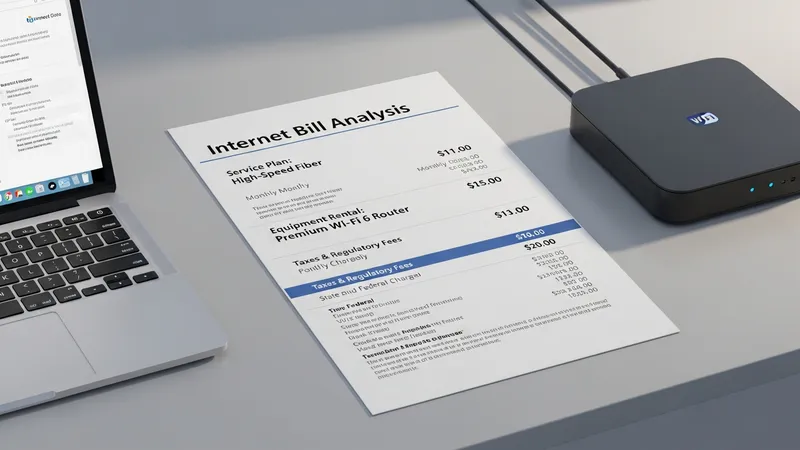
Internet bills in the United States tend to reflect the diversity of available service types, such as digital subscriber line (DSL), cable, fiber-optic, and fixed wireless options. Providers often structure their bills according to service tier, with higher speeds or data allotments resulting in proportionally higher charges. This granular approach enables users to select packages that align with their usage patterns and connectivity needs.
In addition to core service costs, many United States providers incorporate line-item charges for renting networking equipment. Customers may have the option to supply their own hardware, which could affect total monthly fees. These equipment charges are generally transparent and listed as a distinct section on the bill to facilitate informed review by the account holder.
Bill statements usually offer a comprehensive breakdown of all included taxes and regulatory fees. These may vary by location, reflecting local municipal requirements and federal telecommunications mandates. While these charges typically account for a smaller fraction of the bill, they can be significant over time and are important for accurate household or business budgeting.
Providers in the United States are required to conform to transparency standards when presenting billing details to customers. This may include itemized lists of recurring and one-time charges and explanatory notes on any surcharges or policy changes. Clear, readable bills often support consumer understanding and may aid in identifying discrepancies or unexpected charges.
In summary, internet bills are structured documents that reveal the true cost of digital connectivity, with charges reflecting a mix of service plan fees, equipment rentals, and taxes or fees. The following sections examine specific components, pricing dynamics, and consumer considerations for internet provider billing practices in further detail.
The core of most internet bills comprises recurring monthly service plan fees. Providers in the United States typically offer a variety of tiers based on connection type (such as fiber, cable, DSL, or wireless) and speed. For example, a basic DSL plan might be priced at the lower end of the monthly spectrum, while a high-speed fiber plan could be at the higher end. These service charges represent the agreed-upon cost for access to a set level of internet performance and data usage, and may vary across providers and regions.
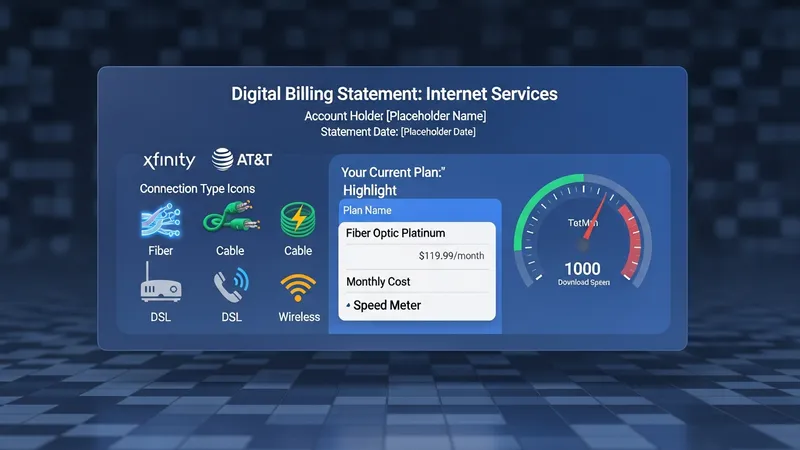
Some service plans incorporate data caps or speed throttling policies, especially with lower-priced options. When applicable, the bill will note if additional charges may be incurred for data consumption exceeding the included allowance. Most providers, such as Xfinity and AT&T, outline these terms on bills and supplemental documentation, improving transparency regarding potential overage costs.
Bill statements commonly include details about bundled services. In some cases, internet service is offered as part of a package with television or home phone services. Bundling may influence the monthly cost or create separate line items within the bill, clarifying which portion is attributable to internet connectivity. This helps users distinguish standalone pricing from value packages available from the same provider.
Terms for any promotional pricing or temporary discounts are also typically itemized on service plan portions of the bill. These offers, when available, are clearly marked with effective and expiration dates. Once promotional periods end, consumers can reference their bill to anticipate forthcoming changes in their monthly service charge, supporting informed financial planning.
A significant feature of internet billing is the charge for equipment such as modems, routers, or network extenders. Many United States providers either rent this equipment to customers for a monthly fee or allow for outright purchase. Rental fees are reflected as recurring line items, usually labeled with the type of device supplied. These charges are generally consistent across billing cycles unless there is a change in hardware or policy by the provider.
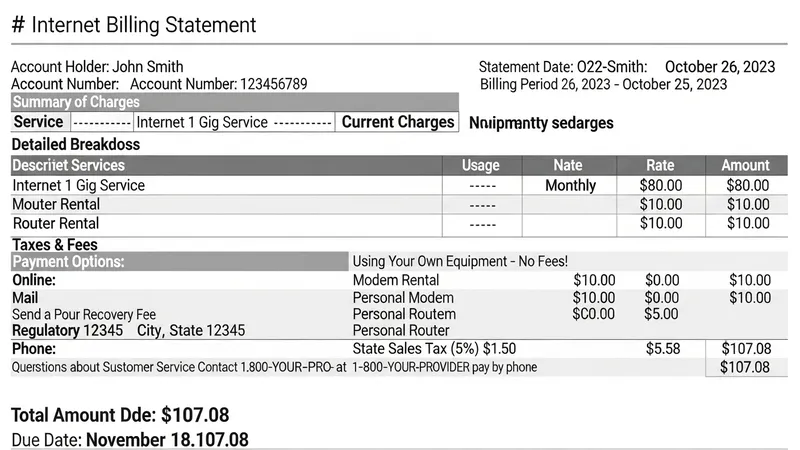
Some customers opt to provide their own modems or routers, as permitted by specific providers. The choice to use personal equipment may eliminate rental fees, though technical compatibility and support limitations are outlined in provider terms. When personal hardware is used, bills typically exclude equipment charges, making the billing statements different from those that include provider-leased devices.
When equipment is upgraded, replaced, or returned, these changes are often mirrored in the billing cycle that immediately follows. For instance, a one-time charge or credit for an equipment swap may be present. Transparent tracking of equipment fees supports consumer awareness about total costs and allows for verification of returned devices or upgrades.
Equipment charges may also be subject to local taxes or applicable surcharges based on state regulation. These added costs are listed alongside the rental or purchase fee on the bill, ensuring that all legally required disclosures are provided to the account holder in a single, consolidated statement.
Internet bills in the United States frequently include a range of taxes and regulatory fees, which are typically mandated by federal, state, and local agencies. These may cover administrative costs for infrastructure support, universal service programs, and related telecommunications policy objectives. Providers itemize these charges on statements, making it clear which fees are imposed by government authorities rather than the provider itself.
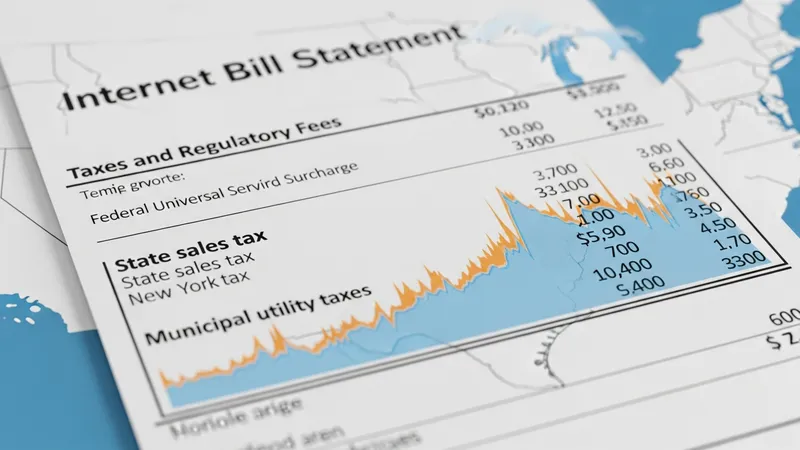
Examples of such fees include the Federal Universal Service Fund surcharge, state sales tax, and municipal utility taxes. The amounts can vary depending on the subscriber’s physical address, as local regulations impact the type and size of applicable charges. As these fees can shift due to legislative changes, monthly bills may fluctuate slightly in response to updated tax rates.
Bills generally provide explanatory notes for each type of tax or surcharge, and some providers link to more detailed descriptions or regulatory statements on their websites. Customers can use these references to learn about the rationale or calculation method for each fee. This practice helps maintain transparency in line with federal and state consumer protection laws.
While taxes and regulatory fees commonly form a smaller portion of the overall bill compared to service plans and equipment rentals, they remain a consistent feature of United States internet billing. Understanding these components is important for accurate budgeting and recognizing policy impacts on telecommunications expenditures.
United States internet providers are subject to regulations that promote clear and transparent billing. Statements are structured to make it easy for consumers to identify each type of charge, including recurring fees, one-time events, and adjustments. Many bills are designed with itemized sections and explanatory footnotes to aid interpretation by individuals with different levels of technical familiarity.
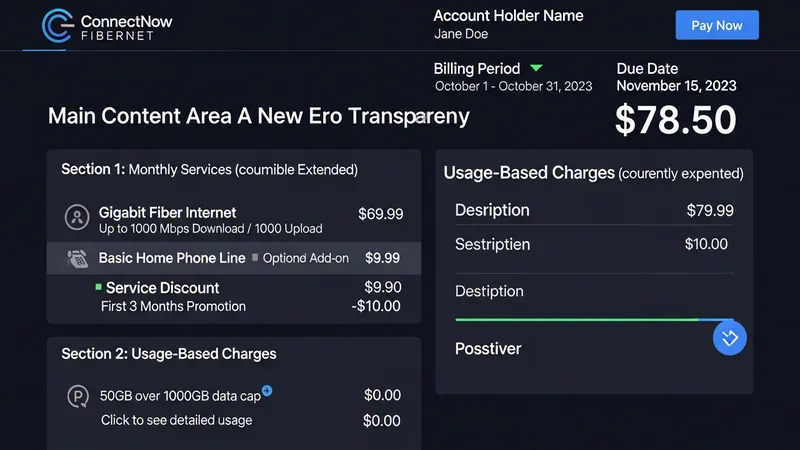
Account holders typically receive their bills through digital or paper formats. Online billing platforms may offer interactive features that allow users to drill down into each charge, review usage history, and compare billing statements over time. This can provide valuable insight for consumers managing household or business telecommunications budgets.
Providers regularly update bill designs to enhance clarity, adding charts, definitions, or hyperlinks to official documentation when appropriate. For example, service plan names and speeds are explicitly stated, equipment charges are differentiated by type, and taxes and fees are assigned distinct categories. These enhancements are designed to comply with regulatory guidelines and simplify financial recordkeeping for users.
Consumers can refer to provider support resources, such as help centers or detailed billing guides, for clarification if any charges are unclear. Maintaining well-organized, transparent billing procedures supports greater trust and may reduce confusion or disputes related to charges, refunds, or service changes. These standards contribute to a more informed and responsive telecommunications environment in the United States.